So… You Got a Kindle for Christmas

Tags

, , , , ,

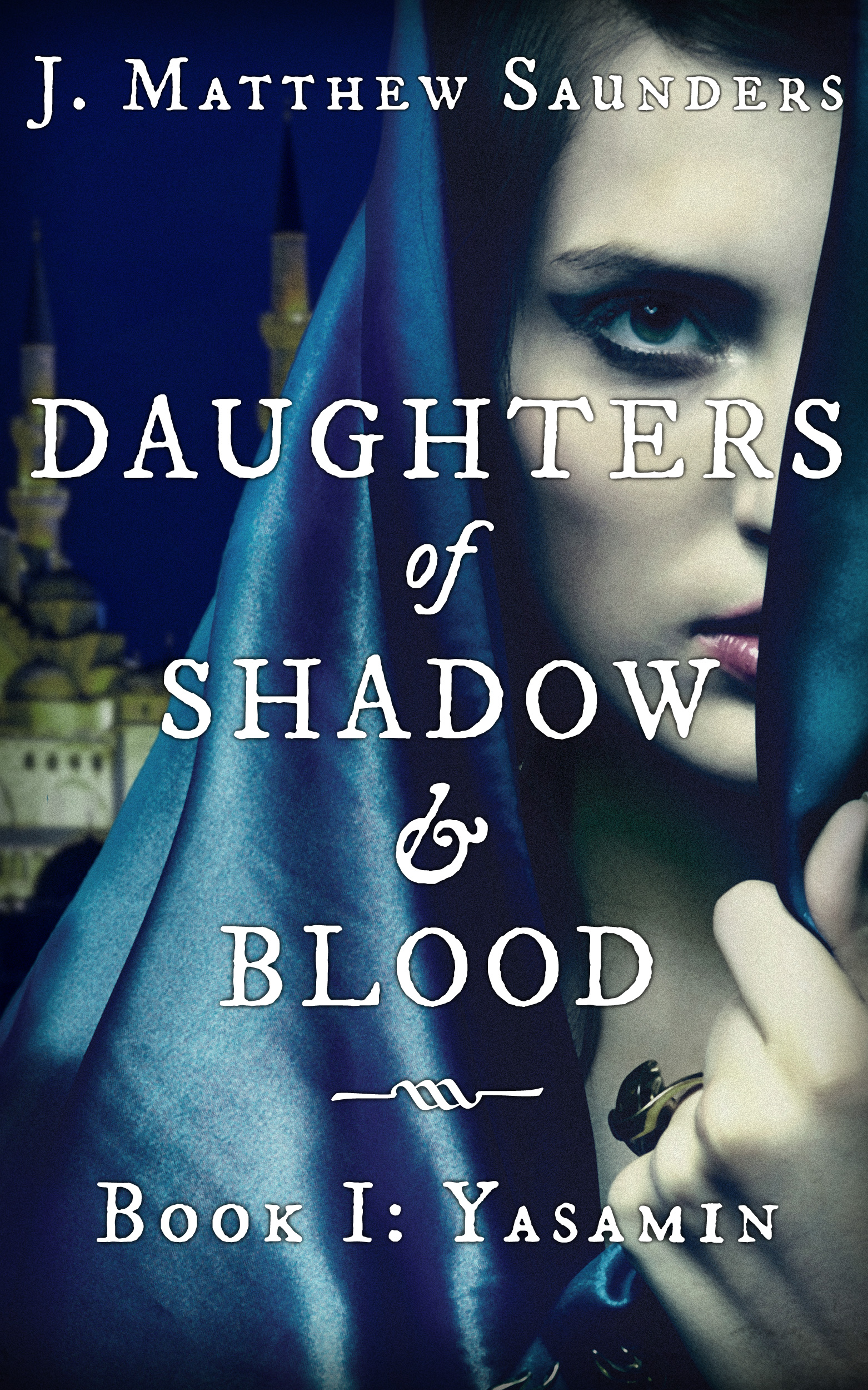
Need something to put on that shiny new gizmo? If you’ve been paying attention, you may have noticed some small changes to the blog, not the least of which is the addition of a new cover over to the right. Here’s a larger version. I designed it myself. True story.

Don't Look at Her: Two Twisted Tales of Lost LoveDon’t Look at Her: Two Twisted Tales of Lost Love is a compilation of two of my previously published short stories, “Blood Brothers” and “Virgil’s Refuge.” It’s available at Amazon.com for download on Kindle. Just click on the title to find out more and to purchase your very own electronic copy for $0.99, if you’re so inclined.

By the way, if you’re on Facebook, why don’t you go on over and “like” my author page, The Writing of J. Matthew Saunders. That way you’ll be sure to get updates on things as they happen, and I’m expecting things to happen in 2012 (good things, not Armageddony things).

The Men’s Health Paradox: When Good Advice Goes Bad

Tags

, , , ,

Men's Health Logo

Image via Wikipedia

I have a subscription to Men’s Health. I admit it. But I have a good reason. Growing up, I was the fat kid. In fact, when I was twelve, I weighed more than I do now, and while I grew into my weight a little when I was a teenager, I was still out of shape in high school and college. After college, I decided it was time to do something, but I didn’t really know how. I had read a couple of random issues of Men’s Health, so I thought getting a subscription might help. I used the magazine to learn about eating healthier and to make myself a work-out plan. Over the course of a year or so, I lost about 50 pounds, and I’ve maintained my current weight ever since.

What I discovered, though, is that you have to read between the lines and really figure out which advice works for you and which doesn’t, because sometimes the magazine contradicts itself, just a little.

For example:*

Fitness

The one-armed reverse triple Lutz dead lift super lunge: The ONE exercise you MUST do to get 6-pack abs.

And then in the next issue:

Exercises you should NEVER do: the one-armed reverse triple Lutz dead lift super lunge. YOU WILL BREAK YOUR NECK, AND YOU WILL DIE.

Nutrition

The Paraguayan spotted chili pepper: the next super-food. Eat a pound of these a day and you’ll never get cancer or heart disease, you’ll regrow hair, and you’ll gain x-ray vision plus the ability to fly. Also, you’ll instantly have 6-pack abs and every woman within a five-mile radius will find you irresistible.

And a few issues later:

The Paraguayan spotted chili pepper: the hidden dangers. Sure, they’ll grant you 6-pack abs and immortality, but will it be worth it when YOUR HAIR TURNS GREEN, YOU GROW THREE EXTRA NIPPLES, AND YOU START TALKING LIKE ELMER FUDD?

Style

Nothing is sexier than being confident in who you are, so you should work to create your own personal, unique style.

HOWEVER, this Fall, skinny dark jeans (True Religion, $211), ankle boots (Cole Haan, $228), Cardigan sweaters (Hugo Boss, $225), and scarves (Banana Republic, $98) are in, so study the picture of the model on the next page very carefully and copy his look EXACTLY or PEOPLE WILL POINT AT YOU AND LAUGH. (And by EXACTLY, we mean you should also get a 31-inch waist and 6-pack abs.)

Grain of salt. I’m just sayin’.

*These examples may be slightly exaggerated and/or entirely made up, but you get the point.

Writing a Novel on the iPhone

Tags

, , , ,

Image representing iPhone as depicted in Crunc...

Image via CrunchBase

I have a family and a full-time job. I do not have a lot of time to write. Some days, I don’t have any time at all. Those days make me very sad. A few months ago, I was distressed to find them becoming more and more numerous. So I got creative. I have half an hour for lunch, and I have an iPhone. Surely, I thought, there is a way to use my phone to get some writing done, and I was pleasantly surprised to find how easy it actually is:

You need an app for remote storage and an app for word processing. I use Dropbox and Quickoffice (This isn’t a commercial for either app, or the iPhone for that matter. This is what works for me. There are other apps and phones out there that may work better for you.) The apps I use are fairly easy to install, and they are (mostly) compatible with one another. You also need to install Dropbox on your computer. Then it’s just a matter of moving files into your Dropbox folder, opening Quickoffice on your phone, and navigating to the files.

I’ve spent many a happy lunchtime editing my novel since then, and I’ve come to discover the advantages and disadvantages of writing on the iPhone.

Advantages

There is really only one advantage, but it’s a major one. I have access to my novel from anywhere. As mentioned I can do edits on my lunch (half-)hour. If I get an idea, I don’t have to hope I remember it until I get to a computer or rummage for the pen and notebook I don’t carry with me. I can just pull out the phone and make a note or make a change to the manuscript itself. If I happen to run into an agent or publisher who thinks I’m brilliant and wants to read the full manuscript (It could happen.) I can just send it from my phone.

Disadvantages

Depending on the size of the document you’re working with, you’ll probably need to be connected to a wireless network. Going strictly 3G can be painfully slow.

Sometimes Dropbox and Quickoffice don’t play well together. Random “validation errors” make for a grumpy writer.

Fat Finger Syndrome. The keyboard in Quickoffice is very small. My fingers are not. Sometimes this causes problems. Sometimes autocorrect exacerbates these problems. On occasion, hilarity ensues. Too bad I’m not writing humor. Also, any significant cutting and pasting is impossible. It’s easier to delete sentences and retype them instead of trying to move them.

Okay, this one may just apply to me, but so far, I haven’t been able to  figure out a way to insert special characters, meaning I have to remember to go back and add acute accents and cedillas and hačeks (See what I did there?). A minor inconvenience, but an inconvenience nonetheless. A bigger problem would be that there are no curly quotes. Going back to change those is a pain.

In conclusion, while a person could write an entire novel on an iPhone, I wouldn’t recommend it. For me, however, it is a really great way to sneak some writing into my day. And that’s worth a lot right now.

Wait, What?

Tags

, , , ,

Medieval illustration of a Christian scribe wr...

Image via Wikipedia

Further empirical proof writers do not think like normal people. The following are actual excerpts (more or less) from conversations among my writer friends. Yeah, I know.

***

“I used a wooden pencil in a story I wrote to stake a vampire.”

“Did it work?”

***

“Lately I’ve been doing a lot of research on hobos.”

***

“I made the mistake of reading The Strain right before trying to go to sleep. When the ice maker made a noise in the kitchen, I freaked out. So I jumped up and grabbed the Samurai sword next to the bed.”

***

“Sometimes I think I’d like a monkey tail.”

“Like, in a jar?”

“No, on my body. Then I could pick up things with it.”

“Oh, ’cause I could get you one in a jar by 3 p.m.”

Five Ways Being a Lawyer Made Me a Better Fiction Writer

Tags

, , ,

It seems counter-intuitive at first. Legal writing and fiction writing are two very different animals, and I’ve heard a number of literary agents and editors say they groan whenever they get a query from someone who identifies him- or herself as an attorney, because attorneys (with a few exceptions) write fiction like they write legal briefs–organized, logical, dry, and boring. However, I truly believe that being a lawyer has made me a better fiction writer, and I think there are certain lessons all writers can take from the legal world. You can thank me later for saving you the law school tuition.

1. Be ruthless.

Not in a Shark kind of way. When writing legal briefs, you have to be ruthless with your editing, because there are hard page limits, and when you have a complex legal argument, ten double-spaced pages is a tight squeeze. Usually a judge won’t accept a brief if it’s even a line over. You learn to eliminate most instances of the word that and all adverbs. You learn three adjectives are not better than one. You learn to rephrase things so there are fewer words (e.g. using the active voice instead of the passive voice or using verbs instead of noun phrases with nominalized verbs). I don’t fear the red pen anymore when I’m editing my fiction writing, and it’s led to much tighter, more compelling prose.

2. Choose your words wisely.

Mark Twain had it right when he said, “The difference between the right word and the almost right word is the difference between lightning and a lightning bug.” People make  jokes, but when Bill Clinton argued over the definition of the word is, it wasn’t all that absurd. Remember, he was a lawyer. I had an argument with another lawyer once over the definition of the word truth, and any attorney will tell you there’s a huge difference between should and shall. Writing fiction isn’t all that different. When talking about someone walking down the street, it makes a difference whether they’re “strolling,” “marching,” “sauntering,” “trudging,” or “slouching.” The same goes for describing a woman as “skinny,” “thin,” “slender,” or “svelte.”

3. Know your audience.

When you’re writing a legal brief meant for a judge, you’re going to use a different tone and language than if you’re writing a letter to a non-lawyer client or to opposing counsel. When writing fiction, you also have to keep your audience in mind. Are your writing for adults, teenagers, preteens? Are you writing primarily for men or for women? If you’re writing novel-length prose, what shelf in the bookstore would your book go on? Agents and publishers especially are going to want to know the answer to that last question, and sometimes the categories can be very specific. Up until about a week ago, I didn’t even know there was a category called “literary horror,” but my novel The Brides fits it perfectly. If you’re writing shorter fiction, what magazines or anthologies specialize in the type of story you’re writing? Again, it can be very specific, and knowing will give you story a much better chance of being accepted.

4. Characters create conflict.

Conflict is of course integral to litigation. The parties on either side have opposing or outright mutually exclusive goals, but very rarely is either side truly evil (sometimes petty, passive-aggressive, or unprofessional, but rarely evil). Remembering to give your antagonist desires, goals, and motivations just as realistic as your protagonist, and having those clashing goals form the basis of the plot, is the key to creating a compelling story.

5. Be confident in your writing.

Nothing predicts a losing case like a halfway argued legal motion. A judge knows when he or she reads a brief full of hedging phrases like, “somewhat” or, “It is our belief that…” the lawyer who wrote it doesn’t have much faith in winning. You have to argue with conviction, even if deep down you think the other side is right. Fiction writing is not for the faint-of-heart. When you write, you have to be willing to do bad things to your characters. You have to be willing to let your protagonists be less than perfect. Sometimes you have to be willing to listen to your characters and let them take the story in a direction you hadn’t intended. When you let others read what you’ve written, you have to be ready for criticism and rejection, and when it happens, you have to be willing to learn from it, pick yourself up, and keep moving forward.

There you have it. I’m not saying doing these things will make you the next John Grisham, but they made me a better fiction writer, and they’ll work for a lot of others, too. Trust me. I’m a lawyer.

Halloween Book Signing

Tags

, , , , , ,

Join me, Darin Kennedy, and Eden Royce as we sign copies of Flesh and Bone: Rise of the Necromancers. The dark fantasy/horror anthology contains stories from each of us, including my story “Blood Brothers.” We’ll be at Joseph-Beth Booksellers in Charlotte, NC on Halloween, Sunday October 31, 2010 from 3 p.m. to 5 p.m.

Danger: Flailing Writer

Tags

, , , ,

Overall, it’s been a good year for me. My novel is finished. I’m poised to query agents. I’ve had three short stories published. I should be very satisfied with myself. So why do I feel so restless?

I know what I’m supposed to do. I’m supposed to keep writing while I try to find an agent. I even know what I should write next, the novel I had always planned to write next. I have character sketches. I have a rough outline. What I don’t have is even an ounce of motivation to actually write it.

Other novels, other stories are in the forefront of my mind all day: characters, plot points, even snippets of dialogue. They won’t go away, no matter how hard I try. Sure, I’ll open up a Word file, jot down a name, maybe make a few notes, but I can’t seem to appease these stories screaming to be written.

So what do I do? Do I write the story that makes sense to write next? Or do I give in and write these other stories?

Follow

Get every new post delivered to your Inbox.